
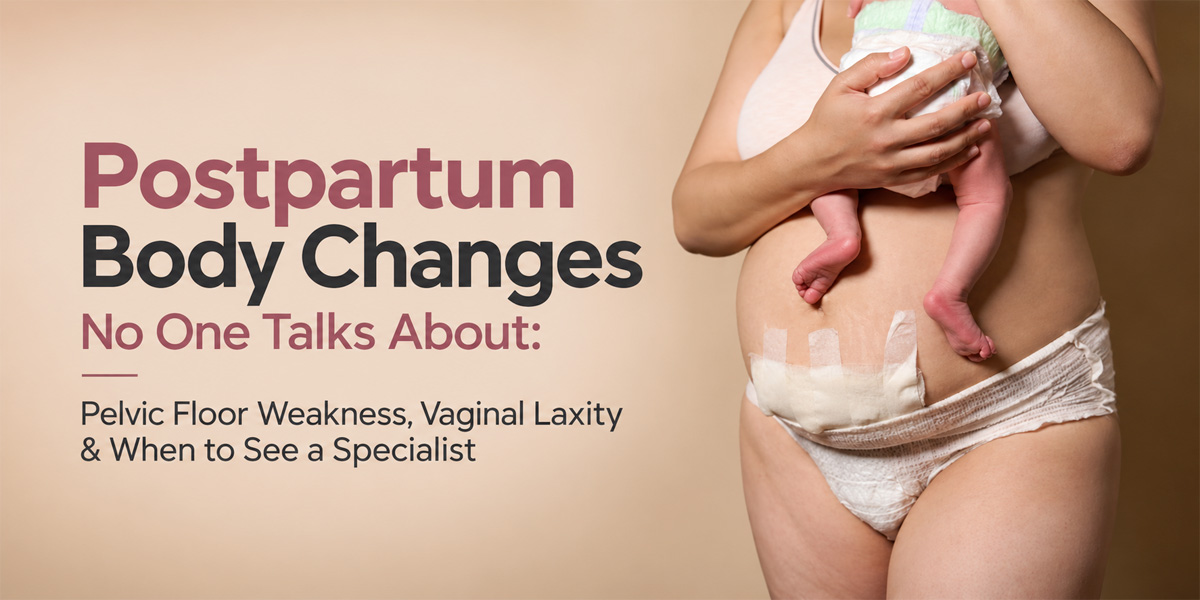
Are postpartum vaginal changes normal, or do they mean something is wrong? Some changes after pregnancy and childbirth are completely normal and improve with time, while persistent symptoms such as pelvic heaviness, urinary leakage, vaginal laxity, pain, or discomfort deserve professional evaluation.
Pregnancy and childbirth can affect the pelvic floor, vaginal tissues, perineum and bladder function. Yet many women are told to simply “wait and see” or accept these changes as a permanent part of motherhood. The truth is that you do not have to ignore symptoms that affect your comfort, confidence or quality of life.
What postpartum vaginal changes can happen after childbirth?
The postpartum period involves significant physical changes. During pregnancy, hormonal changes and the growing uterus place additional pressure on the pelvic floor. Vaginal delivery can further stretch the pelvic-floor muscles and surrounding tissues.
Common postpartum vaginal changes may include:
- A feeling of vaginal looseness or laxity
- Pelvic heaviness or pressure
- Urinary leakage when coughing, sneezing or exercising
- Reduced pelvic-floor strength
- Vaginal dryness or discomfort
- Changes in sexual sensation
- Perineal pain or sensitivity
- Scarring after an episiotomy or tear
- A feeling of something bulging or coming down through the vagina
Some women experience several of these symptoms, while others experience none.
The important point is that every postpartum body is different. Having symptoms does not mean your body has “failed,” and having no symptoms does not mean your recovery is incomplete.
Is vaginal laxity normal after pregnancy?
A temporary feeling of vaginal looseness can occur after vaginal delivery because the vaginal and pelvic-floor tissues have been stretched. In many women, tissues and muscles gradually recover during the postpartum period.
However, persistent vaginal laxity can sometimes be associated with pelvic-floor weakness or changes in the supporting tissues.
It is also important to understand that the sensation of “looseness” is not always caused by the vagina itself. Pelvic-floor muscle function, childbirth-related tissue changes and changes in sensation can all contribute.
If you continue to experience significant laxity or discomfort after your recovery period, a specialist can assess whether there is an underlying anatomical or muscular concern.
Why does pelvic floor weakness happen after delivery?
The pelvic floor is a group of muscles and connective tissues that supports the bladder, uterus and bowel and contributes to bladder and bowel control and sexual function.
Pregnancy places increased load on these structures. Vaginal childbirth can stretch the muscles and connective tissues further, particularly after a prolonged or difficult delivery, instrumental delivery, or significant perineal trauma.
However, pelvic-floor weakness is not limited to women who have delivered vaginally. Pregnancy itself can affect the pelvic floor, and some women who have had a caesarean delivery may also experience pelvic-floor symptoms.
Symptoms can include:
- Urinary leakage
- Difficulty controlling gas or bowel movements
- Pelvic pressure or heaviness
- Reduced pelvic-floor strength
- Discomfort during intercourse
- A feeling of vaginal bulging
These symptoms should not automatically be considered an unavoidable part of motherhood.
What is pelvic floor therapy after delivery?
Pelvic floor therapy after delivery is a specialised form of physiotherapy designed to assess and improve pelvic-floor function.
Importantly, pelvic-floor therapy is not simply about doing more Kegel exercises.
A trained pelvic-floor physiotherapist can assess whether the muscles are weak, overly tight, poorly coordinated, or affected by childbirth-related injury. Treatment may include targeted strengthening, relaxation techniques, breathing and coordination exercises, posture and movement strategies, and education about bladder and bowel habits.
Some women assume that because they have urinary leakage, they simply need to “strengthen” their pelvic floor. That is not always the case. Pelvic-floor muscles can also be excessively tight, and strengthening without proper assessment may not address the underlying problem.
This is why individual assessment matters.
Why does urinary incontinence happen after childbirth?
Urinary incontinence after childbirth is common, particularly when urine leaks during coughing, sneezing, laughing, running or exercising.
This is often called stress urinary incontinence and can occur when the pelvic-floor muscles and supporting tissues are not providing adequate support to the urethra.
Other types of urinary symptoms can have different causes. For example, a sudden urge to urinate or frequent urination may indicate an overactive bladder rather than simple pelvic-floor weakness.
Occasional leakage early after delivery may improve as the body recovers. But persistent or bothersome urinary leakage deserves evaluation.
You do not have to stop exercising, avoid social situations, or plan your day around bathroom access simply because you have had a baby.
When should you see a specialist after childbirth?
You should consider consulting a specialist if postpartum symptoms are persistent, worsening, painful, or interfering with your daily life.
Seek an assessment if you experience:
Persistent urinary leakage: Especially if it occurs during exercise, coughing, sneezing or lifting.
Pelvic heaviness: A persistent sensation of pressure or dragging in the pelvis can require evaluation.
A vaginal bulge: A feeling or appearance of tissue protruding from the vagina may indicate pelvic organ prolapse.
Pain during intercourse: Persistent postpartum pain should not simply be accepted as normal.
Repeated vaginal or perineal tears: Recurrent tearing or significant scar-related discomfort warrants specialist assessment.
Persistent vaginal laxity: If the sensation affects comfort, function or confidence, an evaluation can identify possible causes.
Bowel-control problems: Difficulty controlling gas or stool should be discussed with a healthcare professional.
The earlier an underlying problem is identified, the more clearly you can understand your treatment options.
Does every woman need vaginal tightening after pregnancy?
No. Vaginal tightening after pregnancy is not automatically necessary simply because you have delivered a baby.
The term “vaginal tightening” can refer to very different approaches, including pelvic-floor rehabilitation, non-surgical energy-based treatments, or surgical procedures.
Before considering any tightening procedure, it is important to determine what is actually causing the sensation of laxity.
If the primary issue is pelvic-floor weakness, appropriate rehabilitation may be more useful than a cosmetic or energy-based procedure.
If there is significant structural damage following childbirth, a specialist may discuss other treatment options.
And if there is no medical problem and the concern is simply a normal postpartum change, treatment may not be necessary at all.
The right treatment depends on the cause, not simply the symptom.
Can postpartum pelvic-floor problems be treated without surgery?
Yes. Many postpartum pelvic-floor concerns can initially be managed with conservative treatment.
Depending on the symptoms, this may include pelvic-floor physiotherapy, lifestyle modifications, bladder training, treatment of vaginal dryness, or other targeted measures.
For some women, conservative treatment may significantly improve symptoms. Others may require further investigation or a procedural approach if there is a structural problem that does not respond adequately to non-surgical treatment.
A specialist assessment helps determine where you fall on this spectrum.
What about vaginal dryness after childbirth?
Vaginal dryness can occur after childbirth, particularly during breastfeeding, when hormonal changes may temporarily reduce vaginal lubrication.
This can contribute to:
- Burning or irritation
- Discomfort during intercourse
- Increased friction
- Reduced sexual comfort
Vaginal dryness is different from vaginal laxity, although women may experience both.
Treatment depends on the cause and may include lubricants, vaginal moisturisers, hormonal treatment where appropriate, or other options recommended by a healthcare professional.
Persistent pain should not be dismissed as something you simply need to tolerate after having a baby.
How can you tell whether your postpartum symptoms are normal?
There is no single timeline that defines “normal” recovery for every woman.
Recovery depends on factors such as the type of delivery, pregnancy-related changes, perineal tears or episiotomy, pelvic-floor condition, breastfeeding, hormonal changes, activity levels and individual healing.
Some changes improve naturally over time. Others may persist and require treatment.
A useful rule is:
If a postpartum symptom is persistent, painful, worsening, or affecting your quality of life, it deserves an assessment.
You do not need to wait until the symptoms become severe.
What should you expect from a postpartum specialist consultation?
A consultation should begin with understanding your symptoms rather than immediately recommending a procedure.
Dr. Krupa Bhagat, a Vulvovaginal Surgeon, evaluates vulvovaginal and postpartum concerns with a focus on identifying the underlying cause and creating an individualised treatment plan.
Depending on your symptoms, your evaluation may include a detailed medical and childbirth history, pelvic examination, assessment of pelvic-floor function, and discussion of bladder, bowel, sexual and vaginal symptoms.
Treatment recommendations should be based on your specific findings.
For some women, reassurance and pelvic-floor therapy may be enough. Others may need further evaluation or treatment for prolapse, scar-related problems, urinary incontinence or structural changes.
What can you do about postpartum vaginal changes?
The first step is to stop assuming that every change is either something you must accept or something that needs cosmetic treatment.
Postpartum vaginal changes are common, but persistent symptoms should not be ignored.
Pelvic-floor therapy can help many women. Medical treatment can address hormonal or vaginal symptoms. And when there is a significant structural concern, specialist procedures may be considered.
The goal is not simply to “return the body to how it was before pregnancy.” The goal is to help you feel comfortable, functional and confident in your body after childbirth.
If you are in Ahmedabad or Gujarat and are experiencing persistent postpartum vaginal, pelvic-floor, urinary or sexual symptoms, a specialist consultation can help you understand what is happening and what options are available.
Frequently Asked Questions
1. Are postpartum vaginal changes normal?
Yes. Pregnancy and childbirth can cause temporary changes in vaginal tissues and pelvic-floor function. Persistent or bothersome symptoms should be evaluated.
2. How long does vaginal laxity last after childbirth?
Recovery varies from woman to woman. If laxity remains significant or affects your comfort or function, consult a specialist.
3. Is urinary leakage normal after childbirth?
It can be common after delivery, but persistent urinary leakage is not something you have to live with. It can often be assessed and treated.
4. Can pelvic-floor therapy help after delivery?
Yes. Pelvic-floor therapy can help improve muscle strength, coordination and function, depending on the underlying problem.
5. Do I need vaginal tightening after pregnancy?
Not necessarily. The appropriate treatment depends on whether the concern is related to pelvic-floor weakness, structural changes, hormonal changes, or another condition.
6. When should I see a specialist after childbirth?
See a specialist if you have persistent pain, urinary or bowel leakage, pelvic heaviness, vaginal bulging, significant laxity, or symptoms affecting daily or sexual life.
7. Can postpartum vaginal changes be treated without surgery?
Often, yes. Depending on the cause, treatment may include pelvic-floor therapy, medication, lifestyle measures, or other non-surgical options. Surgery is considered only when clinically appropriate.
Book a Consultation
Your postpartum body does not need to be judged, it needs to be understood.
If you are experiencing persistent postpartum vaginal changes, pelvic-floor weakness, urinary leakage, vaginal laxity, pain or discomfort, seeking the right specialist evaluation can help you understand the cause and explore appropriate treatment options.
Book a consultation with Dr. Krupa Bhagat, Vulvovaginal Surgeon, and take the first step towards better comfort, function and confidence after childbirth.